Standalone Integration
Use FGA with your own authentication system by managing users, organizations, and memberships via API.
FGA works with any authentication system. While AuthKit provides built-in user management, you can integrate FGA standalone by managing users, organizations, and organization memberships through the API.
Use standalone integration when you have an existing authentication system, are migrating from another identity provider, or need programmatic control over user provisioning.
FGA authorization is built on three entities:
Users represent individuals in your application. Each has a unique ID, email, and profile information.
Organizations represent your customers or tenants. They serve as the root of your resource hierarchy.
Organization memberships connect users to organizations and assign an organization-scoped role. Every membership must have at least one role – this determines baseline permissions within the organization.
The organization membership role is always scoped to the organization itself, not to specific resources. For resource-level access control, use role assignments on individual resources.
If you want to grant access exclusively through resource-scoped roles, configure the default organization-scoped role to have no permissions. Users will start with no access and only gain permissions through explicit resource role assignments.
Organizations are the tenants in your application. Create one for each customer:
The external_id maps to your internal customer identifier – typically the primary key from your database.
| Parameter | Description |
|---|---|
name | Display name for the organization (required) |
external_id | Your internal identifier for this customer |
domain_data | Email domains associated with this organization |
metadata | Custom key-value pairs for your application |
Create users in WorkOS to establish their identity for authorization:
| Parameter | Description |
|---|---|
email | User’s email address (required) |
first_name | User’s first name |
last_name | User’s last name |
email_verified | Set to true if you’ve verified the email |
external_id | Your internal user identifier |
password | Password for email/password authentication |
password_hash | Pre-hashed password for migrations |
metadata | Custom key-value pairs |
Organization memberships connect users to organizations and assign their organization-scoped role:
The role_slug determines the user’s organization-scoped permissions. If omitted, the user receives the default role configured in your environment. This role applies to the organization as a whole – for resource-specific access, use role assignments.
If you’ve enabled multiple roles, assign several roles at once with role_slugs:
Once you’ve created users and memberships, FGA works as documented in other guides. The organization membership ID is the subject for all authorization operations.
Sync WorkOS records as users move through your application’s lifecycle. Use the external_id field to map your internal IDs to WorkOS entities.
Create the WorkOS user and organization membership when a user signs up in your application:
Update the organization membership when a user’s role changes:
Create or remove role assignments when a user’s access to specific resources changes:
For complete API documentation on managing users, organizations, and memberships, see the API reference:
- Users – create, update, list, and delete users
- Organizations – create, update, list, and delete organizations
- Organization Memberships – create, update, deactivate, and delete memberships
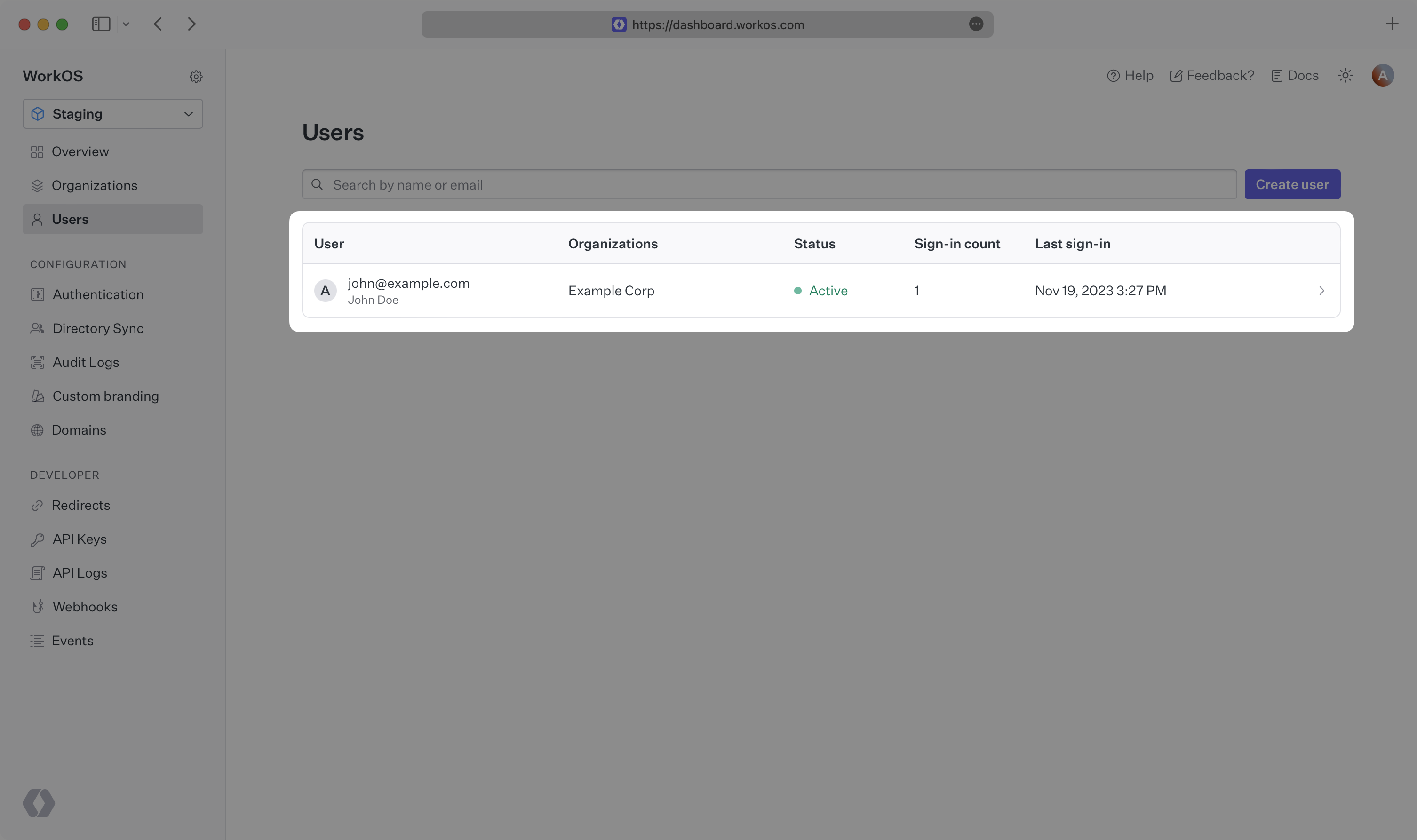
Users created via API appear in the WorkOS Dashboard. Navigate to Users to see all users in your environment, or Organizations to view members of a specific organization.
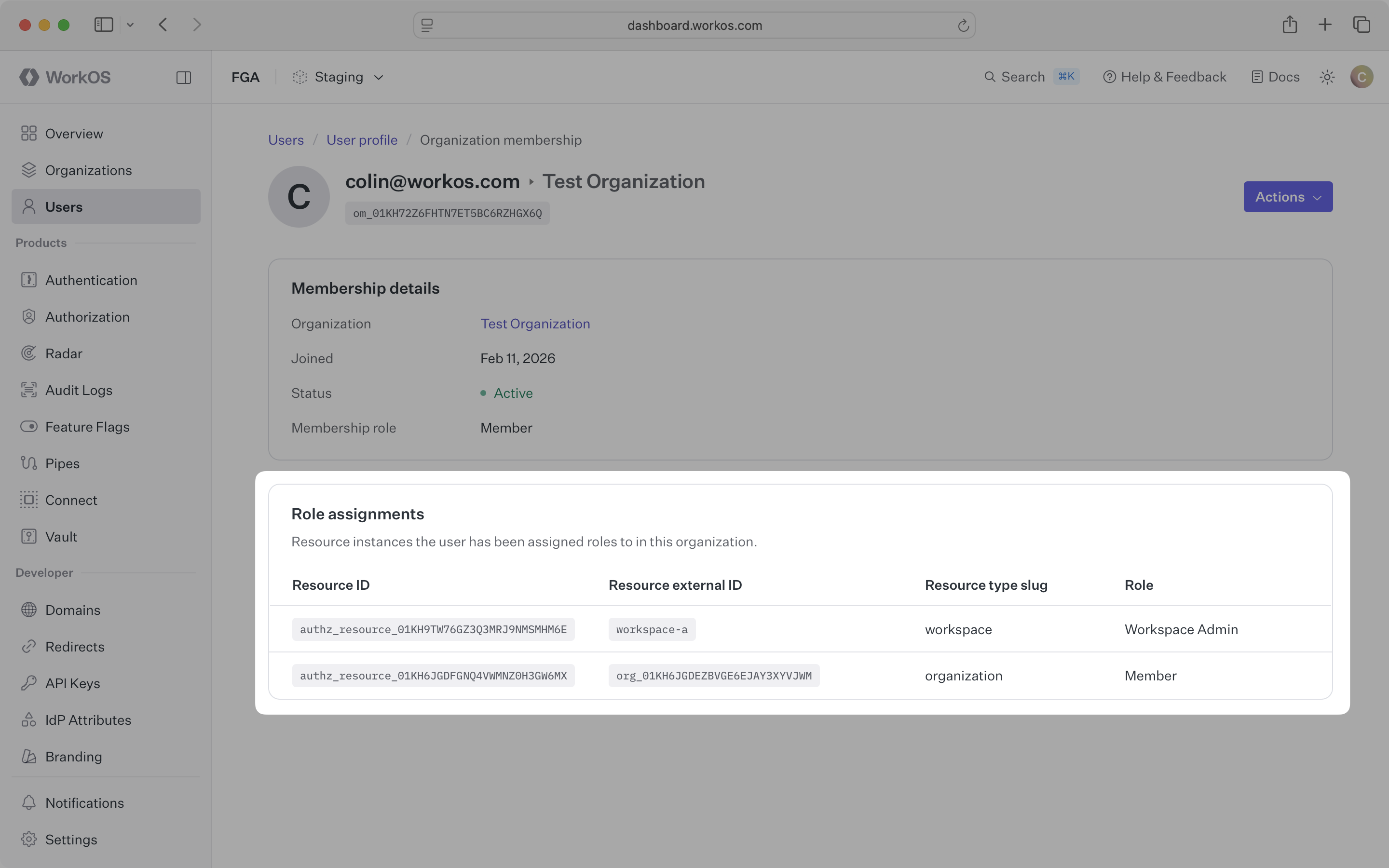
View a user’s resource-scoped role assignments by navigating to their organization membership.
To migrate from another identity provider, export your users and import them into WorkOS using the APIs described above. You can import password hashes so users keep their existing credentials, and use a dual-write strategy to handle new signups during migration.
See the migration guides for detailed steps, including provider-specific guides for Auth0, Firebase, Clerk, and others.